Algarve sweets explained: Dom Rodrigo, fine almond confectionery, figos cheios, estrelas de figo, Folhados de Tavira, empanadilhas and carob, with the official source for each, where to try them near Cacela Velha and what I could not confirm.
Algarve confectionery lives on almonds, figs, eggs and carob. This guide presents the region's traditional sweets and pastries based on the entries of the Directorate-General for Agriculture and Rural Development (DGADR), which keeps the catalogue of Traditional Portuguese Products (DGADR), and says where to try them near Cacela Velha and what I could not confirm.
Quick answer
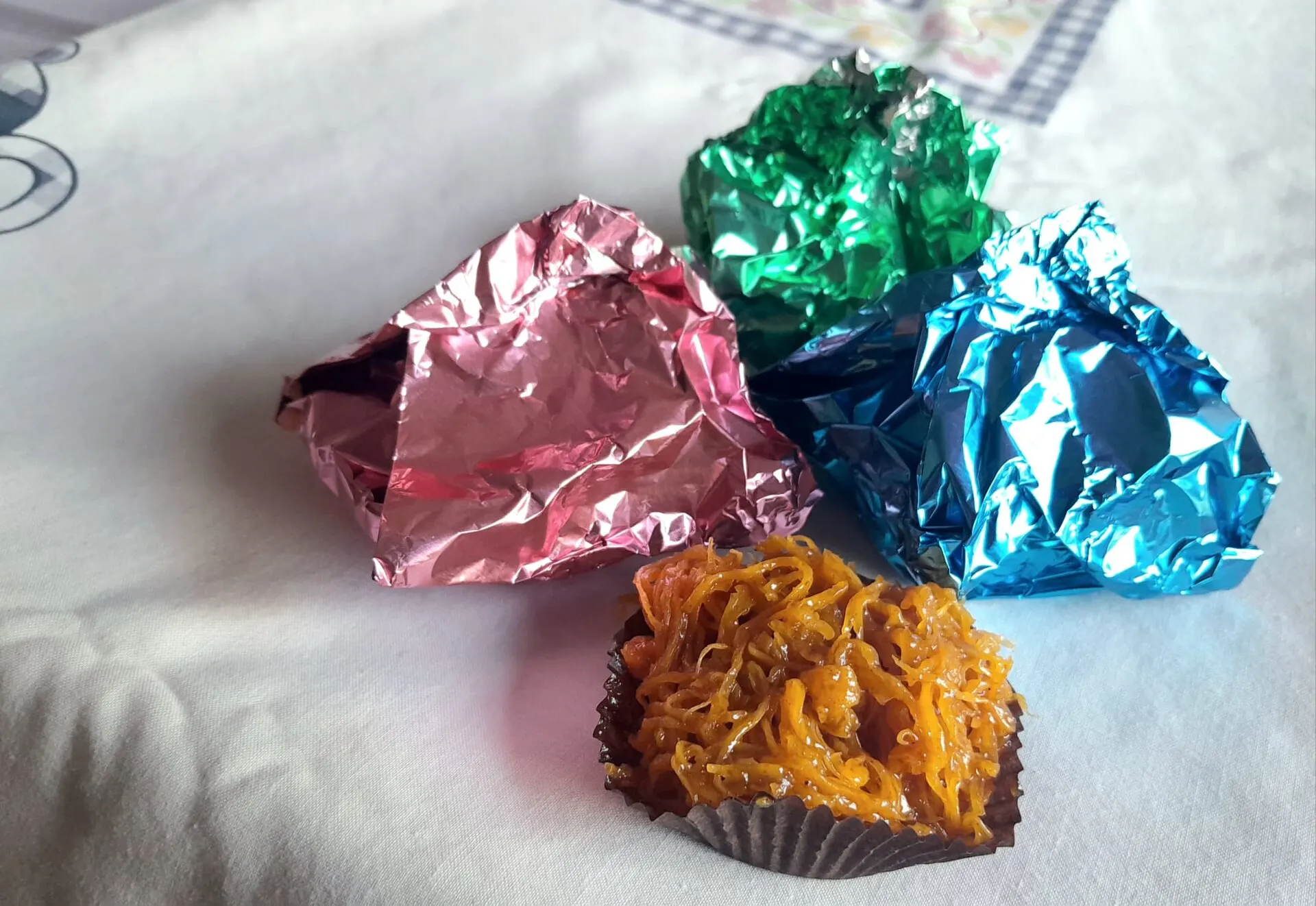
- Dom Rodrigo: egg threads with ovos-moles, almonds, cinnamon and sugar syrup, toasted in its own syrup, wrapped in coloured paper (DGADR).
- Fine confectionery (queijinhos, almond fruits): almond-and-sugar dough filled with ovos-moles, shaped like cheeses, hams, fruits and other figures (DGADR).
- Figos cheios: dried figs stuffed and toasted, with almonds, sugar, chocolate, cinnamon and fennel (DGADR).
- Estrelas de figo: figs opened into a star with an almond at each tip; made around All Saints' Day (DGADR).
- Folhados de Tavira: round puff-pastry cakes coated in caramelised sugar (DGADR).
- Where to try them: pastry shops, the dessert menus of traditional restaurants and Tavira's Municipal Market, which has pastry shops and cafés (municipality). I did not confirm where to buy each sweet.
Dom Rodrigo
According to the DGADR, it is a lightly toasted sweet, golden in colour, dusted with cinnamon and shaped like a ball of yarn, wrapped in parchment and coloured metallic paper. It contains egg threads with ovos-moles, almonds, cinnamon and sugar syrup; no industrial caramel is used and the balls are toasted in a frying pan directly in the syrup in which the egg threads were cooked.
- Origin: associated with Lagos and the name of D. Rodrigo de Menezes, governor and captain-general of the Algarve; the recipe is said to come from the Convento de Nossa Senhora do Carmo in Lagos and to have passed to a local family in the 19th century.
- Production area: all municipalities of the Faro district.
- Status: the entry lists a producers' association (ADRA) and two notices in the Diário da República, dated 27 August and 9 December 2025. The EU Official Journal fields are blank, so I cannot confirm a final European registration.
Fine confectionery: queijinhos and almond fruits
The DGADR entry describes small sweets of about 4 to 5 cm and 50 g, with an almond-and-sugar dough in equal parts bound with one or two egg whites and a filling of ovos-moles. They are shaped like cheeses, hams, sausages and fruits, sometimes coloured, and are served in pleated paper cases. The DGADR mentions a possible Arab origin and a link with convent confectionery, and a close link with Pastelaria Almeida in Portimão, with these sweets mentioned since 1918.
Figos cheios and estrelas de figo
- Figos cheios de Olhão: dried, stuffed and toasted figs, eaten at any time of day. They contain figs, almonds, sugar, chocolate, cinnamon and fennel; each weighs about 40 g and comes wrapped in white fringed paper and braided like a string of garlic. By oral tradition, seafarers carried them as an energy source on fishing trips (DGADR).
- Estrelas de figo: made with figs of the regional Cotio variety and almonds, opened with four cuts to form a star with an almond at each tip. They are made and eaten around All Saints' Day and are now sold all year (DGADR).
Folhados de Tavira
According to the DGADR, they are round puff-pastry cakes of about 10 cm in diameter and 90 to 100 g, with flour, margarine, lard and eggs; the dough is cut into strips and rolled around a stick before baking, and after baking the cakes are coated in caramelised sugar. They were once sold only in Tavira, at Café Cunha, and the entry says they are now made at Pastelaria Gardy in Faro. By oral tradition, the recipe dates from 1509 and from a convent on Largo da Atalaia in Tavira, closed in 1862. The entry cites a 2001 publication: I did not confirm where to buy this sweet in Tavira today.
Empanadilhas and bolo de massa de pão
- Empanadilhas (sweet-potato pastries): half-moons of about 10 cm, fried, with a filling of sweet potato, sugar syrup, almonds and orange zest, dusted with sugar and cinnamon. Eaten mainly at Christmas (DGADR).
- Bolo de massa de pão (honey cake or "bolo podre"): a round, dark, moist cake made with bread dough, honey, eggs, coffee, olive oil and Port wine, among other ingredients, made mainly in the hill country for festive occasions (DGADR).
Carob
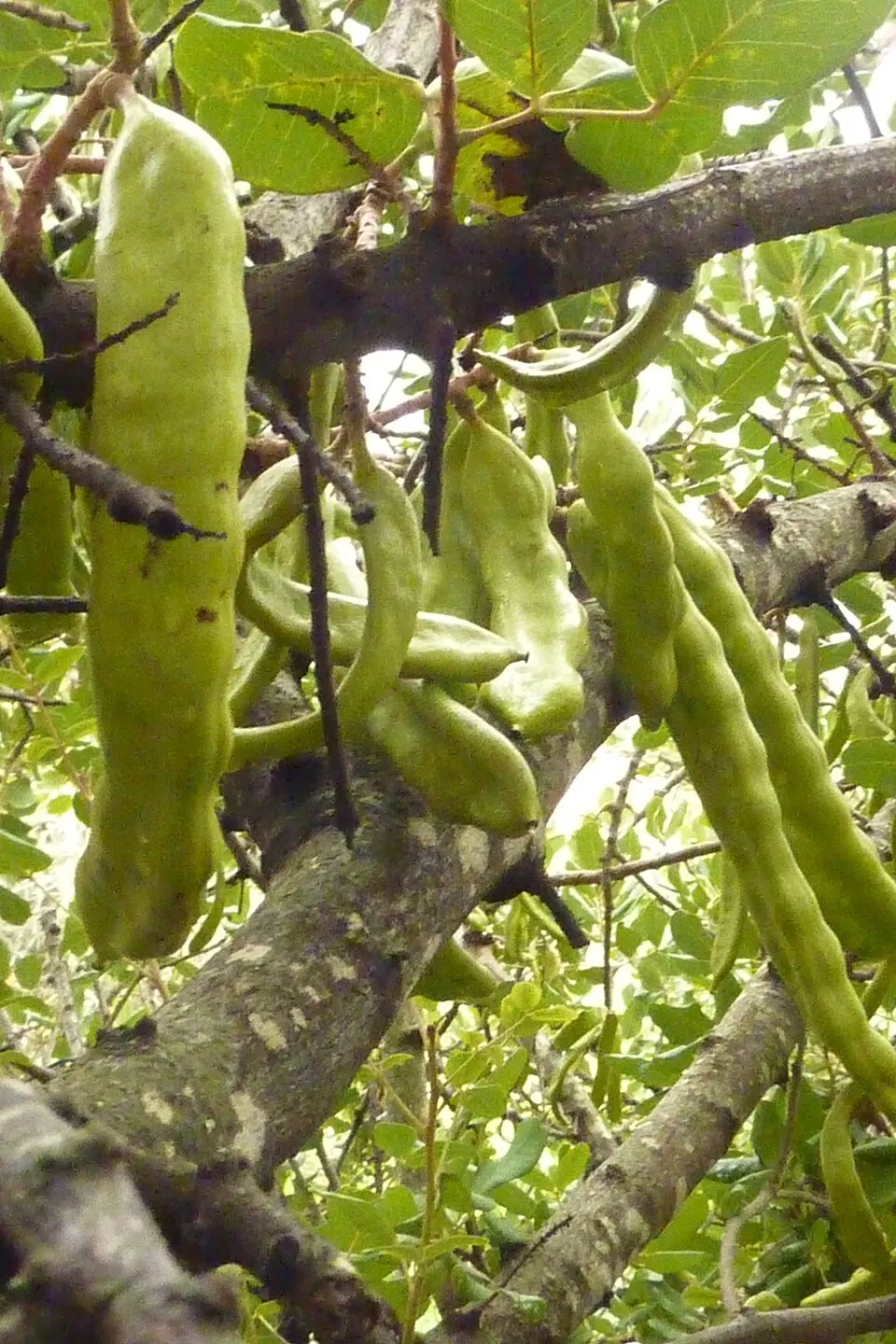
Carob is a pod that ripens from brown to almost black, harvested in August and September, grown on the Algarve's barrocal and often alongside almond, olive and fig trees (DGADR). The entry mentions carob bread and cake coatings but does not describe carob sweets in detail, so I did not confirm recipes such as carob tart or carob cake.
Where to try them near Cacela Velha
- Tavira: the Municipal Market has pastry shops, cafés and a seafood restaurant; summer hours are 6:30 to 14:00 and winter hours 7:30 to 14:00 (municipality). A local guide says pastry shops and the dessert menus of traditional restaurants are a good bet for Dom Rodrigo and morgado, without naming places (Taste Tavira, 21 May 2025).
- Ice cream: in October 2026, Postal gave 4.30 euros for two scoops at Fábrica do Meu Avô in Tavira (Postal).
- Cacela Velha: I found no pastry shops listed on this site. See where to eat in Cacela Velha and The Flavours of the East Algarve.
- More: food in Tavira and what to see in Tavira.
Where to stay
- Cacela Velha: Booking.com · Tavira: Booking.com.
- Compare the areas in where to stay near Cacela Velha · Hotels.com · Vrbo.
Sources
- DGADR, Traditional Portuguese Products: Algarve, Dom Rodrigo, Doçaria Fina, Folhados de Tavira, Figos Cheios de Olhão, Estrelas de Figo, Empanadilhas, Bolo de Massa de Pão and Alfarroba.
- Tavira municipality: Municipal Market. Taste Tavira: Algarve sweets. Postal: Tavira on 10 € (October 2026).
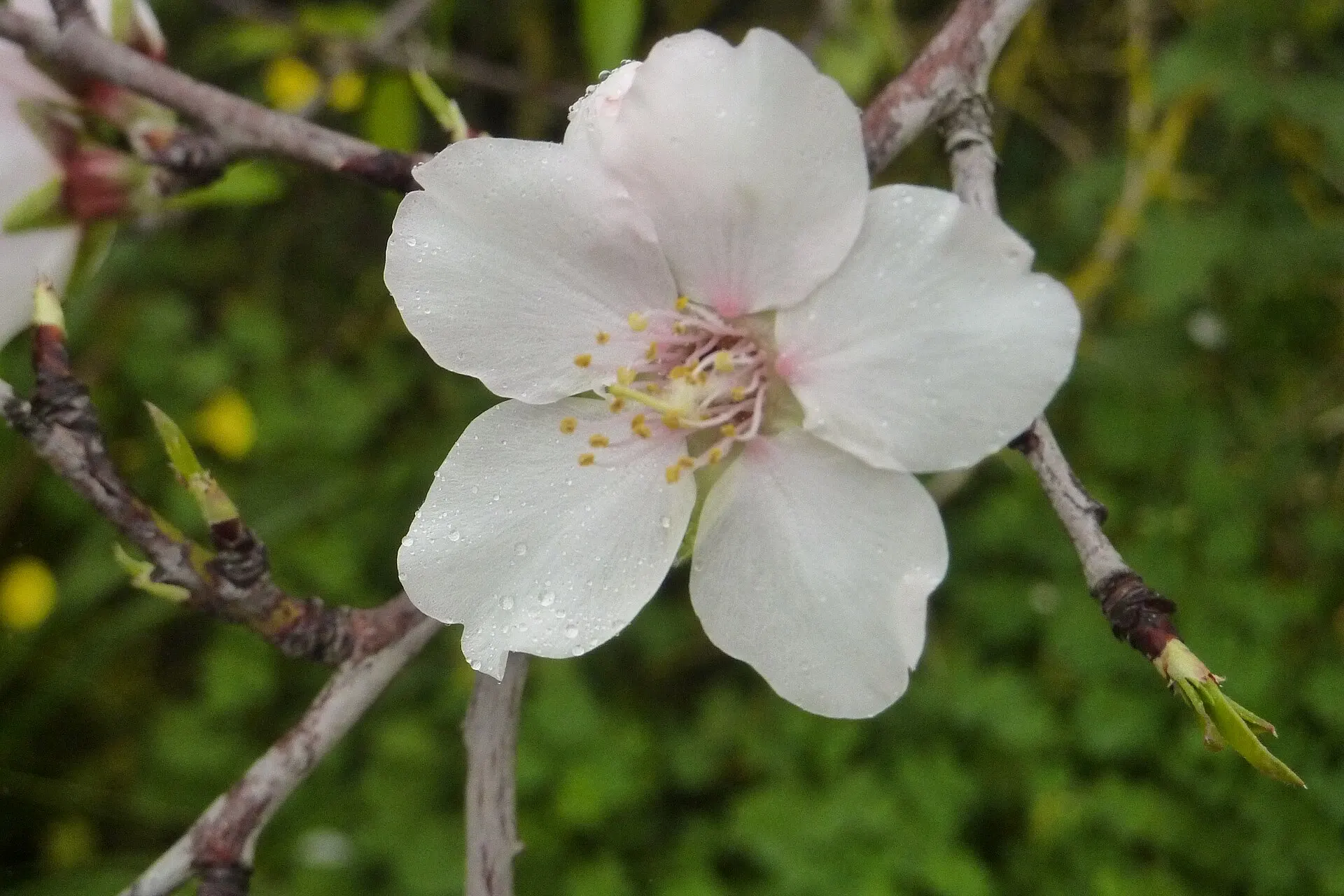
- Photographs: Cardoazul (CC BY-SA 4.0) and muffinn (CC BY 2.0), via Wikimedia Commons. The almond blossom was photographed in Alvor and the carob pods in Fuseta.
Frequently asked questions
What is Dom Rodrigo?
An Algarve sweet of egg threads with ovos-moles, almonds, cinnamon and sugar syrup, toasted in its own syrup and wrapped in coloured paper, according to the Traditional Portuguese Products entry (DGADR). It is associated with Lagos.
Which sweet is typical of Tavira?
Folhados de Tavira: round puff-pastry cakes coated in caramelised sugar. According to the DGADR, they were first sold at Café Cunha in Tavira and are now made at Pastelaria Gardy in Faro; the entry cites a 2001 publication.
What are figos cheios de Olhão?
Dried, stuffed and toasted figs with almonds, sugar, chocolate, cinnamon and fennel, wrapped in white fringed paper and braided like a string of garlic, according to the DGADR.
When are estrelas de figo eaten?
They are made and eaten around All Saints' Day (1 November), but are now sold all year, according to the DGADR.