Where to see flamingos and other birds near Cacela Velha: Castro Marim, the Tavira salt pans and the Ria Formosa. Seasons, tides, what is known about the 2021 nesting and how to watch without disturbing.
The East Algarve is one of the best places in the Algarve to see birds. East of Cacela Velha lies the Castro Marim and Vila Real de Santo António Marsh Nature Reserve; to the west, the Tavira salt pans and the Ria Formosa. This guide covers where to see flamingos and other birds, in which season, how tides change what you can see, and what is known about the flamingos that nested in Castro Marim in 2021.
Quick answer
- When: all year round. According to Aves de Portugal, the Castro Marim marsh can be visited all year, though it is less attractive between July and early August; in the Ria Formosa the best season is autumn and winter.
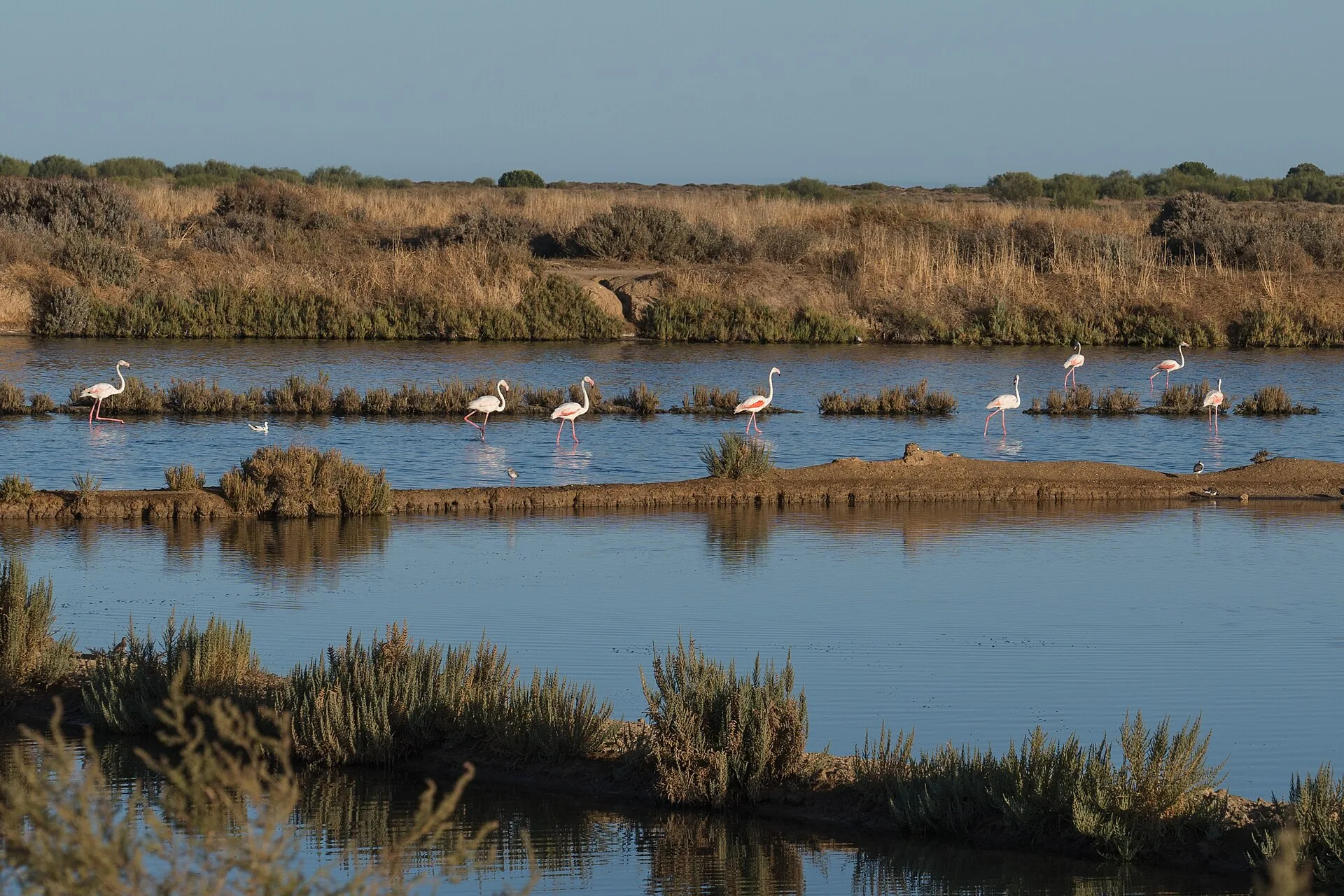
- Flamingos: at Cerro do Bufo, in the Castro Marim salt pans, the flamingo is present all year. Birding Places also lists the greater flamingo at the Salinas do Forte do Rato, in Tavira.
- Where: Cerro do Bufo, Venta-Moinhos and Esteiro da Carrasqueira, in Castro Marim; Salinas do Forte do Rato, in Tavira; and the Ria Formosa by boat.
- Tides: the mudflats of Esteiro da Carrasqueira are exposed at low tide and good for waders; at the Salinas do Forte do Rato, Birding Places says watching is "possible at high tide". See Tides in Cacela Velha.
- Respect: stay on the paths, use binoculars and do not approach the birds.
The flamingos of Castro Marim
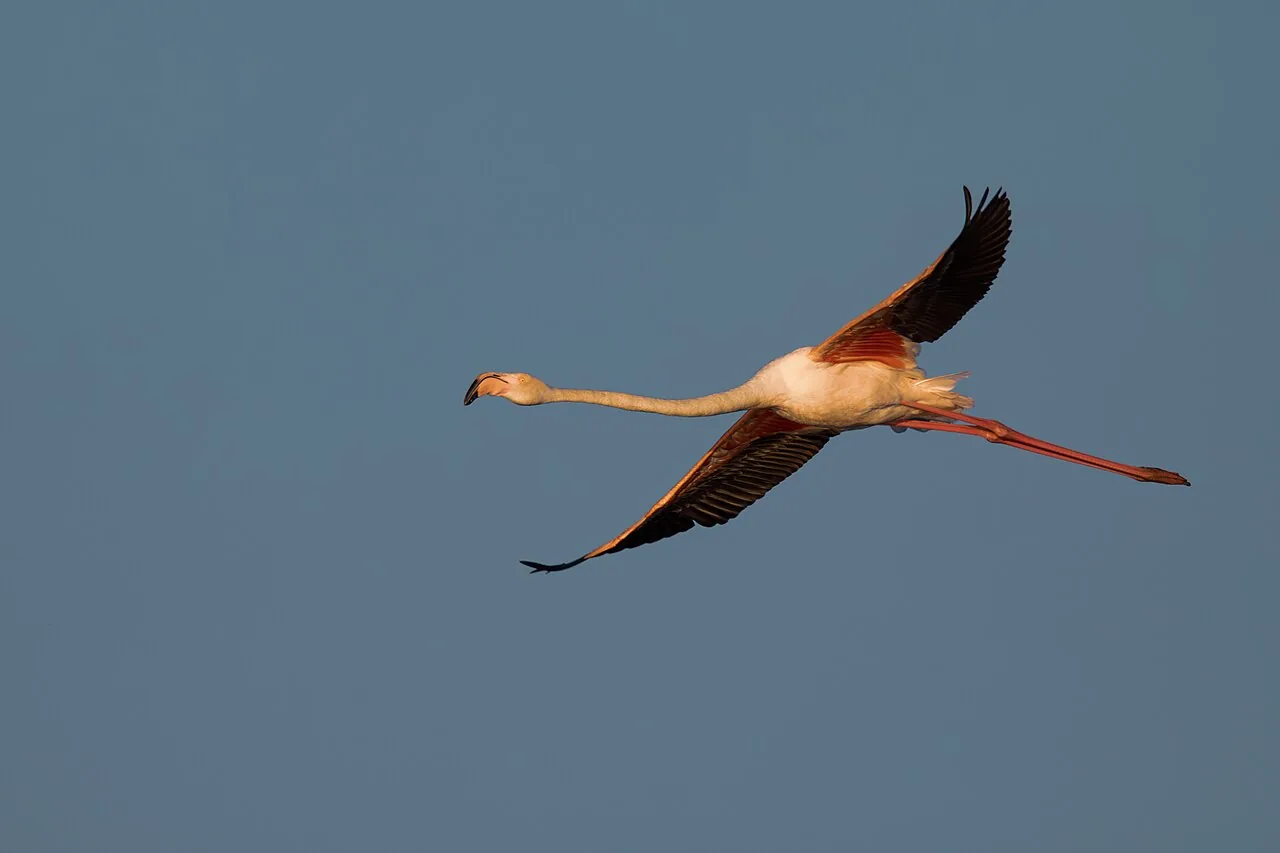
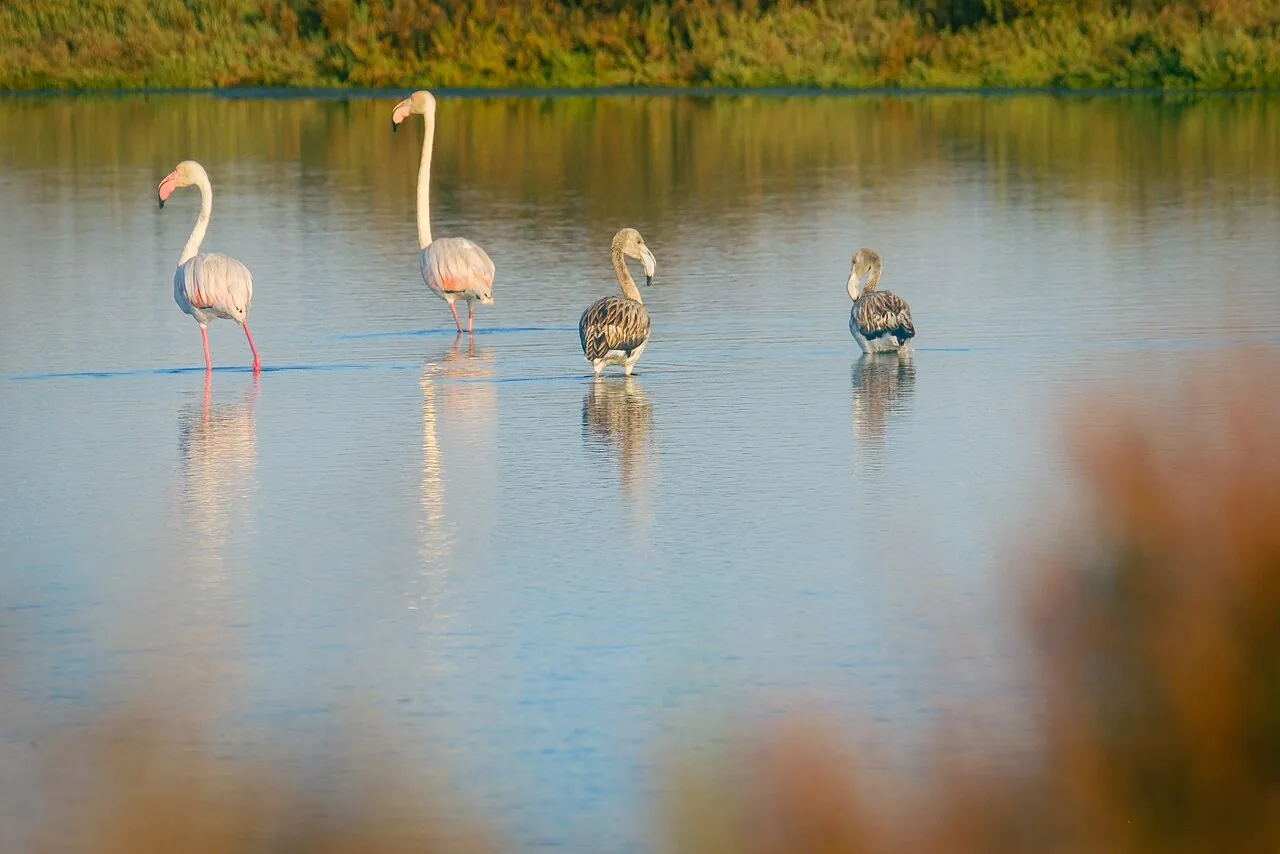
In July 2021, the ICNF (Portugal's nature conservation institute) announced that about 550 flamingos were born, from 880 nests, in a colony of about 3,000 birds in one of the salt pans of the Castro Marim and Vila Real de Santo António Marsh Nature Reserve. According to the ICNF, it was the first successful nesting of the species in Portugal (DN, 5 July 2021). Earlier attempts in the Algarve, in the 1980s and in 2010, had failed, and the ICNF said the nesting could repeat. I did not find later confirmation.
The colony was in a private salt pan, so it is not a place to visit. To see flamingos, use the trails and viewpoints below.
Where to see birds near Cacela Velha
Castro Marim and Vila Real de Santo António Marsh (to the east)
The reserve covers 23.08 km², was created in 1975, has been a Ramsar site since 1996 and has about 153 bird species, according to Wikipedia.
- Cerro do Bufo (salt pans): reached by the N125-1, between Castro Marim railway station and the village, and explored on foot. According to Aves de Portugal, the flamingo, pied avocet, spoonbill and black-winged stilt are present all year; in spring and summer you can see, for example, Audouin's gull and little tern, and in winter various wintering birds.
- Venta-Moinhos marsh: next to the international bridge over the Guadiana and the reserve headquarters, signposted from the N122.
- Esteiro da Carrasqueira: on the N122, between Castro Marim and Vila Real de Santo António. The mudflats on the east side of the road are exposed at low tide and good for waders.
- By car: from the A22, take the N125 to the Praia Verde junction and then the N125-1 towards Castro Marim station. Compare car hire at Faro Airport.
Tavira salt pans (to the west)
The Salinas do Forte do Rato, by the mouth of the Gilão river, list the greater flamingo at the top of their birds, with the black-winged stilt, pied avocet and spoonbill. You can get there by car, bike or on foot; park at the end of the pier, near Forte do Rato. There is no hide, and Birding Places says watching is "possible at high tide" (Birding Places).
Ria Formosa
The Ria Formosa Natural Park was created in 1987, covers about 18,400 hectares and stretches for 60 km, from Ancão beach to Manta Rota beach (Wikipedia). Cacela Velha is at its eastern end. According to BirdLife (the Ria Formosa IBA), the site regularly holds 20,000 or more wintering waterbirds, in an assessment from 2002 (Key Biodiversity Areas). See the Ria Formosa guide and the article on Cacela Velha in autumn and winter.
How to watch without disturbing
- Bring binoculars and keep your distance: if a bird takes flight, you are too close.
- Stay on the paths and public tracks. Do not enter working salt pans or private land.
- Check the tide before you go, in Tides in Cacela Velha.
- Do not walk across the lagoon or sandbanks. The municipality and the Maritime Authority advise against it.
- Follow the instructions at each site. The reserve headquarters is at Venta-Moinhos marsh, in Castro Marim.
Where to stay
- Cacela Velha: farms and country houses at the eastern end of the Ria Formosa. Availability on Booking.com.
- Tavira: the most practical base for the salt pans and the town. See the Tavira guide. Availability on Booking.com.
- Vila Real de Santo António: the closest base to Castro Marim. See the Vila Real de Santo António guide. Availability on Booking.com.
- Compare all areas in the guide Where to Stay Near Cacela Velha · Hotels.com · Vrbo.
Getting there
- By car: the most practical way to link Cacela Velha, Castro Marim and Tavira. Compare car hire at Faro Airport. See the guide how to get to Cacela Velha.
- From Faro airport: Algar Vip Travel, private transfers with a driver.
- By train: Castro Marim has a station, next to the N125-1 that leads to Cerro do Bufo.
Where to eat
After a morning of birdwatching, the Ria Formosa is served at the table. See Restaurante Casa Velha, Casa da Igreja and Marisqueira Fábrica do Costa, and the best restaurants near Cacela Velha. For what to try in the East Algarve, read the food of the Sotavento.
What to do
- Boat trips on the Ria Formosa, with licensed operators.
- Ria Formosa: jeep, boat, salt pans and flamingos: an offer that combines these activities; check the itinerary on the page.
- Sunset trips and food tours in Tavira.
- See also what to do in the region.
Sources
- Aves de Portugal (SPEA): Sapal de Castro Marim and Ria Formosa.
- DN, 5 July 2021: 550 flamingos nasceram pela primeira vez no Algarve.
- Wikipedia: Castro Marim and Vila Real de Santo António Marsh Natural Reserve and Parque Natural da Ria Formosa.
- BirdLife / Key Biodiversity Areas: Ria Formosa (Faro lagoon).
- Birding Places: Salinas do Forte do Rato.
- Photographs: Alexkom000 (CC BY 4.0) and LuisMAfonso (CC BY-SA 4.0), via Wikimedia Commons.
Frequently asked questions
Where can I see flamingos near Cacela Velha?
At Cerro do Bufo, in the salt pans of the Castro Marim and Vila Real de Santo António Marsh Nature Reserve, to the east, where Aves de Portugal lists the flamingo as present all year, and at the Salinas do Forte do Rato, in Tavira, to the west, where Birding Places lists the greater flamingo.
What is the best season for birdwatching in the East Algarve?
You can do it all year. According to Aves de Portugal, the Castro Marim marsh is less attractive between July and early August, and in the Ria Formosa the best season is autumn and winter.
Do flamingos nest in the Algarve?
In 2021, the ICNF announced the birth of about 550 flamingos in a salt pan of the Castro Marim and Vila Real de Santo António Marsh Nature Reserve, the first successful nesting of the species in Portugal. The ICNF said it could repeat; I did not find later confirmation.
Do tides affect birdwatching?
Yes. According to Aves de Portugal, the mudflats of Esteiro da Carrasqueira are exposed at low tide and good for waders, and Birding Places lists the Salinas do Forte do Rato as watchable at high tide. Check the tides before you go.