Where to eat oysters in Cacela Velha, which oysters are farmed in the Ria Formosa, what happened to the Cacela oyster farms and what to check before you eat. With dated prices and sources.
Oysters are one of the most common orders in Cacela Velha, but the story behind the plate is less simple than the name suggests. This guide covers where to taste them, how oysters are farmed in the Ria Formosa, what happened to Cacela's own oyster farms and what to check before you eat.
Quick answer
- Where to taste them: in the village, the Casa da Igreja lists lagoon oysters among its most common orders. According to Postal (30 June 2025), 12 oysters cost 16.80 euros and the house does not take reservations. Check prices and hours, which change.
- Which oyster: the Pacific oyster (Crassostrea gigas), native to Japan, is the one farmed in the Ria Formosa.
- Farms in Cacela: according to Sul Informação (March 2018), the last oyster producer in Cacela Velha gave up that year. I did not find later news of production resuming, so do not assume the oyster you are served was raised in front of the village: ask.
- Ria Formosa: accounts for more than 90% of the bivalves produced in Portugal, with 2022 data (Barlavento).
- Safety: buy and eat oysters at licensed businesses and check the IPMA bivalve bulletins if in doubt.
How oysters are farmed in the Ria Formosa
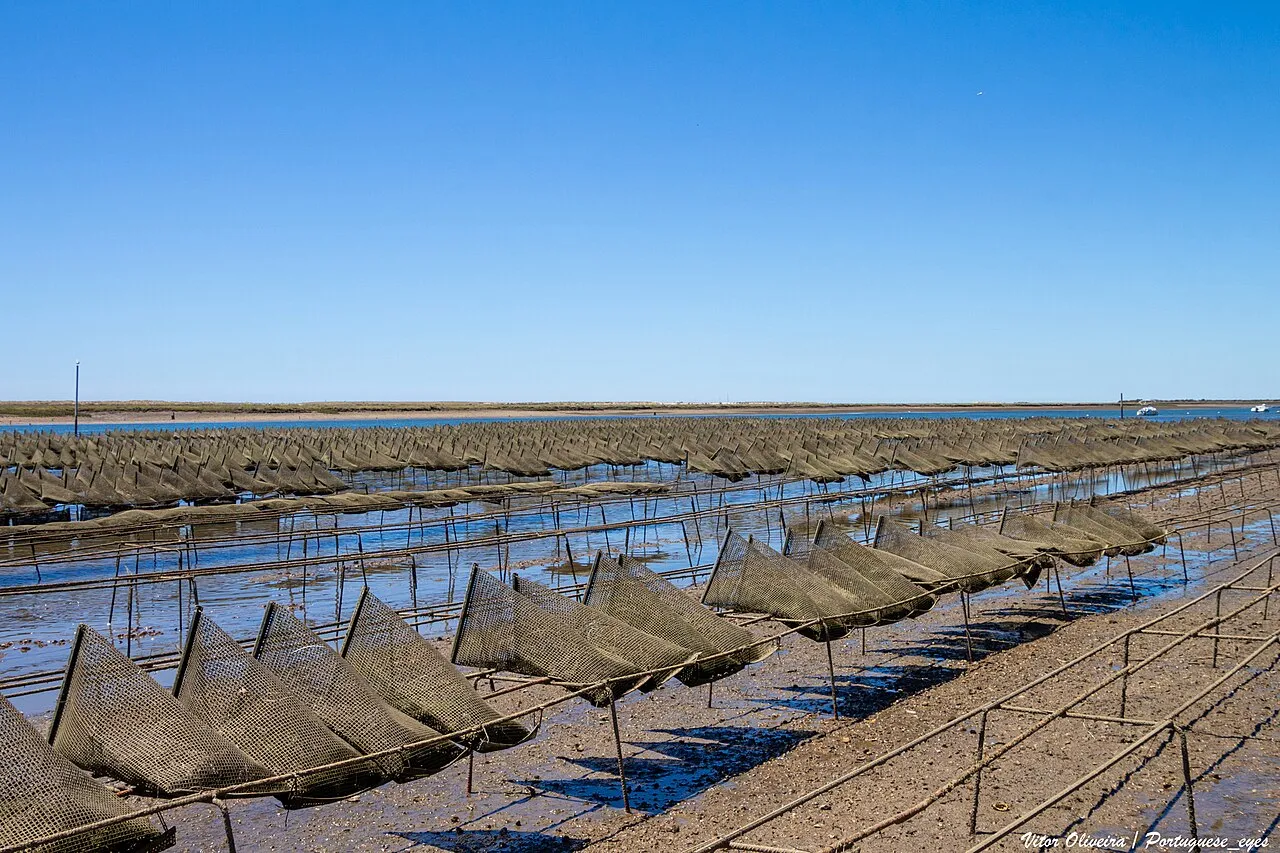
In the Ria Formosa, oysters are grown in mesh bags on raised tables inside the farms. According to a University of Porto thesis, producers used juveniles from French hatcheries (U. Porto repository). A 2011 Portugal Resident article describes the process: young oysters of 2 to 6 mm go into fine-mesh bags and, as they grow, are sorted and moved to larger-mesh bags, taking one to one and a half years to reach selling weight, about 65 to 90 grams (Portugal Resident). These are 2011 and 2003 figures; I did not find more recent numbers.
The Cacela producer interviewed in 2018 raised diploid oysters, which reproduce, rather than triploid ones, hatchery-raised and sterile, which he described as the large majority of Algarve farms. He said the former "do not reach the same size, but have another flavour" (Sul Informação). That is the producer's opinion, not a scientific conclusion.
What happened to the Cacela farms
In March 2018 Sul Informação told the story of Jorge Minhalma, who for 20 years ran two farms in the inlet in front of Cacela Velha. According to him, Cacela once had "20 or 30" farmers and, at the end of the 20th century, producers in Cacela and Fábrica began to focus on oysters. The paper writes that many Algarve people first tasted oysters at the Fábrica restaurant.
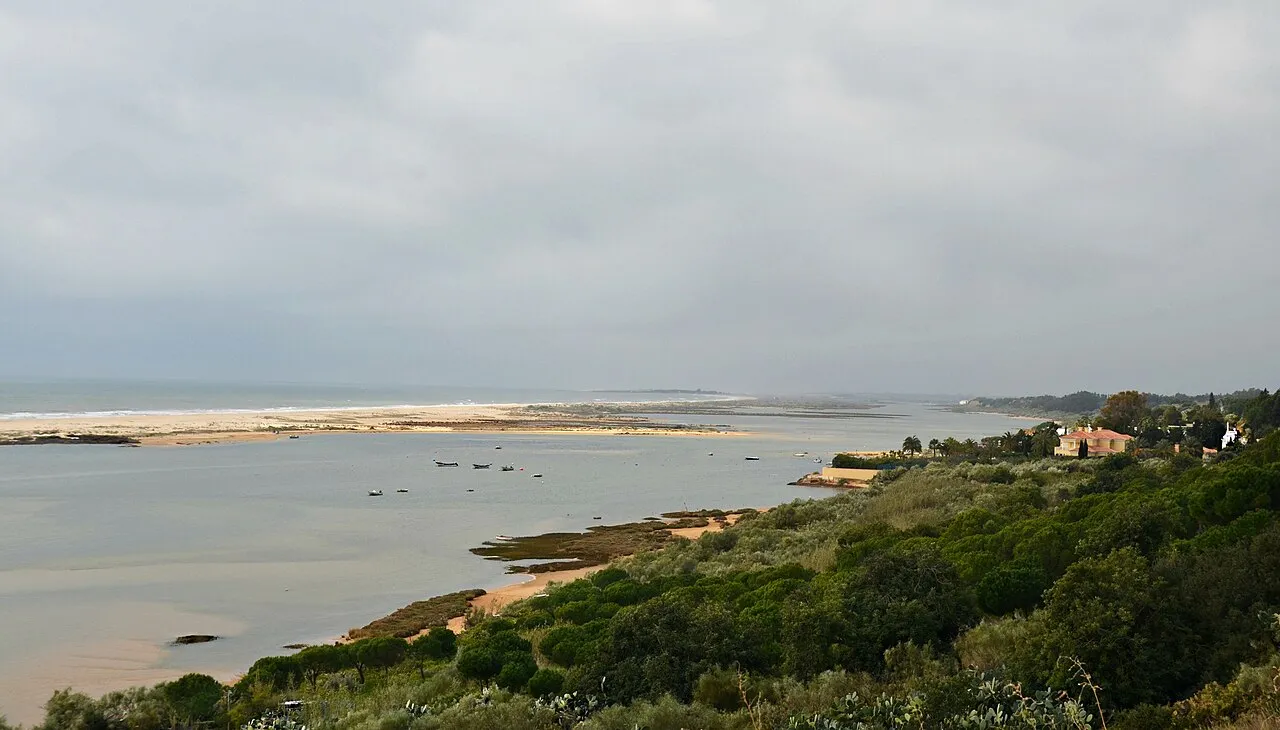
Things changed after a channel was opened in the dune in 2010, which, according to the producer, brought sand into the lagoon. In 2012 he lost about 100,000 oysters at one farm and, in March 2018, after storm Ema, he threw about 400,000 back into the water and gave up. The Portuguese Environment Agency, quoted by the paper, said it was analysing the situation. The article dates from 2018 and I did not find more recent information on dredging or on production returning.
Where to taste oysters
- Casa da Igreja, Cacela Velha: according to Time Out (July 2024), the lagoon oysters are still the draw and the hours were Monday to Sunday, 16:30 to 22:00. Postal (June 2025) quotes the owner saying they sell up to 120 kilos a day and gives 16.80 euros for 12 oysters. I did not find any reference to where the oysters served come from.
- Restaurante Casa Velha, Cacela Velha: specialises in fresh shellfish, according to its listing. Check whether it has oysters that day.
- Água Salgada Marisqueira, Altura: its listing includes oysters among the shellfish it serves.
- See also the best restaurants near Cacela Velha and the food of the Sotavento.
If you want to know where the oysters come from, ask the restaurant: it is a normal question and the answer may change with the day and the supplier.
Before you eat oysters
- Licensed business: in April 2022 the Tavira Maritime Police, with ASAE and the tax authority, shut down an illegal depuration plant that drew water from the lagoon and seized 712 kilos of oysters (Postal). Prefer known, licensed restaurants and sellers.
- Harvest bans: IPMA publishes bivalve bulletins and production zones can be closed because of biotoxins. Portugal Resident (2011) mentions a two-week ban on bivalve sales in April that year. Check IPMA if in doubt.
- Health: if you have doubts about eating raw shellfish, talk to your doctor.
Visits and experiences
- Food tours in Tavira: check the page for what is included, the duration and the bad-weather policy. I did not check whether they include oysters.
- Boat trips on the Ria Formosa: check the itinerary and departure points on the page.
- For the lagoon and the tides, read the Ria Formosa guide, Fábrica beach and Tides in Cacela Velha.
Getting there
- By car: the most practical option. Compare car hire at Faro Airport. See how to get to Cacela Velha.
- Without a car: see Cacela Velha without a car.
- From Faro airport: Algar Vip Travel, private transfers with a driver.
Where to stay
- Cacela Velha: Booking.com.
- Tavira: Booking.com.
- Compare all areas in where to stay near Cacela Velha · Hotels.com · Vrbo.
Sources
- Sul Informação, 15 March 2018: Último viveirista de Cacela Velha não produzirá mais ostras.
- Postal, 30 June 2025: Nesta aldeia do Algarve… fazer fila para comer ostras.
- Time Out: Casa da Igreja.
- Portugal Resident, 2011: Oyster farming in the Algarve.
- University of Porto: Crescimento e qualidade da ostra em viveiros da Ria Formosa.
- Barlavento: Ria Formosa: aquaculture and bivalves.
- Postal, 21 April 2022: Polícia Marítima encerra depuradora ilegal em Tavira.
- Photographs: Vitor Oliveira (CC BY-SA 2.0) and Prof.Lippold (CC BY-SA 4.0), via Wikimedia Commons.
Frequently asked questions
Where can you taste oysters in Cacela Velha?
The Casa da Igreja, in the village, lists lagoon oysters among its most common orders. According to Postal (June 2025), 12 oysters cost 16.80 euros and the house does not take reservations. Check prices and hours before you go.
Are the oysters served in Cacela Velha farmed in Cacela?
Not necessarily. According to Sul Informação (March 2018), the last oyster producer in Cacela Velha gave up that year and I did not find news of production resuming. Ask the restaurant where they come from.
Which oysters are farmed in the Ria Formosa?
The Pacific oyster (Crassostrea gigas), grown in mesh bags on tables in the farms. According to Portugal Resident (2011), it takes one to one and a half years to reach selling weight, about 65 to 90 grams.
Is it safe to eat oysters from the Ria Formosa?
Buy from licensed businesses. IPMA publishes bivalve bulletins and production zones can be closed because of biotoxins. If you have doubts about eating raw shellfish, talk to your doctor.